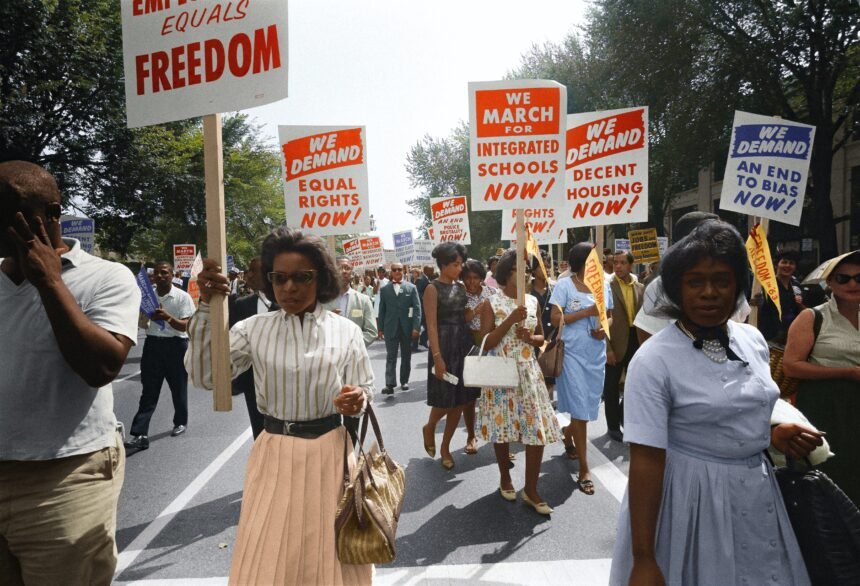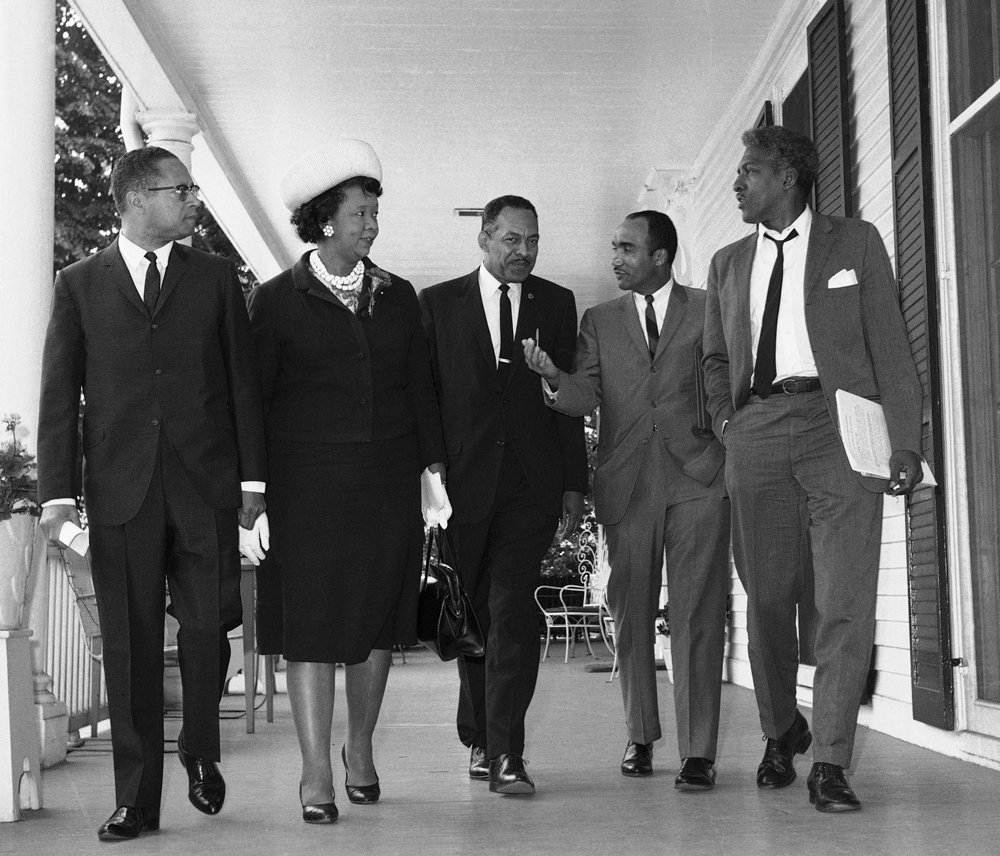
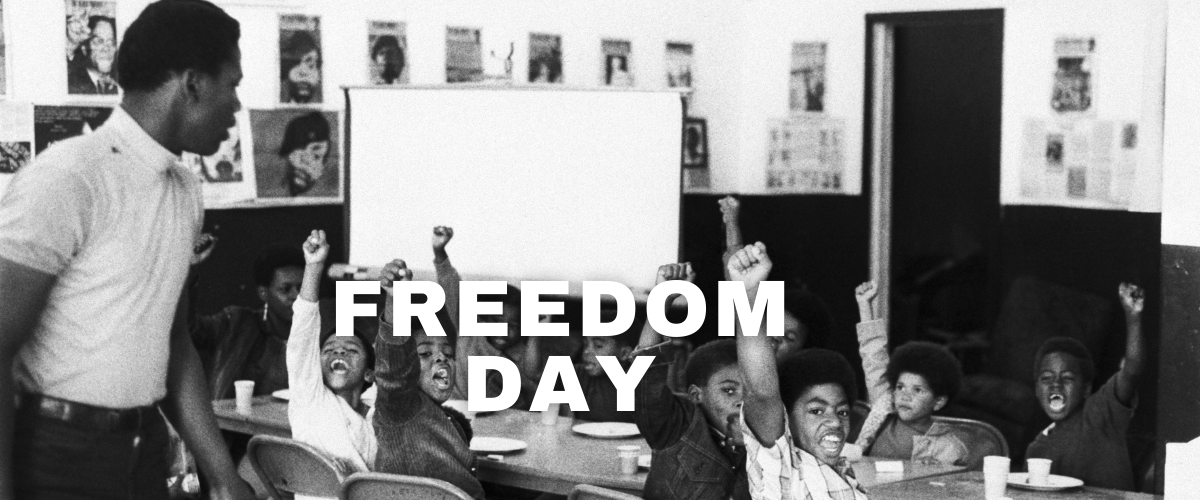
Freedom Day is NAAM’s monthly free admission day, honoring the history, culture, and movements that continue to shape the pursuit of freedom for all.THE COURAGE TO STAND
Remembering the 1968 Olympic Human Rights Protest
October 16, 1968
Freedom is not advanced only in courtrooms, legislatures, or marches.
Sometimes it moves forward when people recognize that the moment before them demands something more—and decide to stand for what they believe.
On October 16, 1968, three Olympic medalists stepped onto a podium in Mexico City.
American Tommie Smith had just won gold in the men's 200-meter race. Australian Peter Norman had won silver. American John Carlos had won bronze.
They had reached one of the highest stages in international sport.
Then they used that stage to ask the world to confront injustice.
As the American national anthem played, Smith and Carlos bowed their heads and raised black-gloved fists. They stood without shoes, wearing black socks to call attention to poverty in Black America. Their clothing and gestures carried messages about racial injustice, economic inequality, Black dignity, and human rights.
Beside them stood Peter Norman.
Norman did not raise a fist. Instead, he wore the same Olympic Project for Human Rights (OPHR) badge worn by Smith and Carlos, publicly demonstrating his solidarity with their cause.
The moment lasted only minutes.
Its meaning has endured for generations.
Remembering the 1968 Olympic Human Rights Protest
The demonstration is commonly remembered as the Black Power Salute.
But its story—and its meaning—reaches further.
Smith repeatedly described the demonstration in the broader language of human rights, freedom, and dignity. And the moment on the podium did not begin with Smith and Carlos.
It grew from a larger movement.
In the years leading to the 1968 Olympics, sociologist and activist Harry Edwards, together with Black athletes including Tommie Smith and Lee Evans, were principal organizers of the Olympic Project for Human Rights.
OPHR sought to use the extraordinary visibility of sports to confront racial discrimination and inequality experienced by Black Americans.
Its organizers were asking a profound question:
What responsibility comes with having a platform?
The movement considered a boycott of the 1968 Olympic Games by Black American athletes. Ultimately, there was no collective boycott. Athletes instead made individual decisions about whether to compete—and how to use the platform the Olympics provided.
Smith, Carlos, Evans, and others chose to compete.
But competing did not mean remaining silent.
OCTOBER 16: THE WORLD WATCHES
The men's 200-meter final was itself historic.
Tommie Smith won gold in a world-record 19.83 seconds.
Peter Norman won silver in 20.06 seconds, setting an Australian national record.
John Carlos won bronze in 20.10 seconds.
Then came the moment the world remembers.
As the American flag rose and the national anthem played, Smith raised his right fist.
Carlos raised his left.
They shared a single pair of black gloves, each wearing one.
There were no speeches from the podium.
There did not need to be.
The symbols spoke.
THE BLACK-GLOVED FISTS
The raised fists became the enduring image of the demonstration—symbols associated with Black Power, resistance, dignity, unity, and the demand for human rights.
THE BLACK SOCKS
Smith and Carlos stood without shoes, wearing black socks to draw attention to poverty and economic inequality in Black America.
Their statement reminded the world that freedom could not be measured only by changes in law. The ability to live with dignity, security, and opportunity mattered too.
THE BOWED HEADS
As the national anthem played, Smith and Carlos bowed their heads, representing their prayers for Black Americans.
THE BLACK SCARF AND BEADS
Smith wore a black scarf as an expression of Black identity and pride.
Carlos wore beads around his neck in remembrance of people who had been lynched and subjected to racial violence.
THE OPHR BADGES
Smith and Carlos both wore Olympic Project for Human Rights badges.
So did Peter Norman.
That detail changes how we should understand the photograph.
This was not simply the story of two Black American athletes raising their fists.
It was also the story of a movement—and of solidarity.
THE COST OF TAKING A STAND
The world did not immediately celebrate what happened in Mexico City.
The consequences for Smith and Carlos came quickly.
Under pressure from the International Olympic Committee, the U.S. Olympic Committee suspended them, and they were required to leave the Olympic Village.
They returned home to intense criticism and received death threats.
Some Americans viewed their demonstration as disrespectful to the flag, the national anthem, and the Olympic Games.
Others understood it as an act of conscience—a demand that America confront the distance between its democratic ideals and the experiences of millions of its Black citizens.
Even Black athletes disagreed about the demonstration and about how athletes should respond to racial injustice.
That complexity matters.
There was never one Black response to 1968.
But Smith and Carlos had made their choice.
And their removal from the Olympic Village did not end the movement.
BEHIND THE PHOTOGRAPH WAS A MOVEMENT
The famous photograph captures a few extraordinary seconds.
Understanding what surrounded those seconds reveals something larger.
Harry Edwards helps us understand the organizing behind the moment.
Lee Evans helps us understand the movement surrounding it.
Peter Norman helps us understand solidarity.
John Carlos helps us understand resistance.
Tommie Smith helps us understand the extraordinary power of using one's greatest public moment to make an appeal for human dignity.
Together, their stories remind us that history is rarely made by one person alone.
Behind the photograph were relationships.
Behind the gesture was organizing.
Behind the organizing were ideas.
And behind those ideas was a larger struggle by Black Americans insisting that equality, dignity, and freedom must belong to everyone.
WHY NAAM REMEMBERS
The Northwest African American Museum recognizes October 16, 1968, as a Freedom Day because the moment demonstrates how Black history can illuminate universal questions about freedom, courage, citizenship, responsibility, and solidarity.
The history sits at the heart of NAAM's current exhibition, The Story of the Salute.
The exhibition explores not only the iconic Olympic podium but the people, organizing, and ideas surrounding it—including Tommie Smith, John Carlos, Peter Norman, Harry Edwards, Lee Evans, and the Olympic Project for Human Rights.
Their stories remind us that history is rarely made by a single dramatic act.
Movements create possibilities.
Individuals make choices.
Others decide whether to stand with them.
The 1968 Olympic protest also reminds us that Black history is not simply a record of injustice.
It is a record of people confronting injustice.
Of communities organizing.
Of individuals finding courage.
Of people standing beside one another.
And of generations imagining that something better is possible.
That is why this history speaks so directly to NAAM's mission to use Black heritage to cultivate healing and hope for all.
The wisdom contained within the Black American experience does not belong only to the past.
It can help all of us think more deeply about the future we are building together.
Did You Know?
PETER NORMAN: THE COURAGE TO STAND BESIDE
Peter Norman's place in this history matters.
Norman was a white Australian.
He could have collected his silver medal, stood quietly through the ceremony, and walked away.
Instead, when he learned what Smith and Carlos intended to do, he supported their stand for human rights.
Norman wore an OPHR badge on the podium.
His choice adds another dimension to the story of October 16.
Smith and Carlos were confronting injustices experienced by their own community.
Norman demonstrated what solidarity can look like when the injustice is not directed at you.
His presence raises another enduring question:
What does solidarity require of us?
Norman remained proud of his decision throughout his life.
When he died in 2006, Tommie Smith and John Carlos served as pallbearers at his funeral.
Their friendship became another part of the legacy created on that podium.
TWO DAYS LATER: LEE EVANS
On October 18, Lee Evans stepped onto the track for the Olympic 400-meter final.
Evans was not simply another American sprinter.
He was Smith's San José State teammate and one of the principal athlete-organizers of OPHR.
After Smith and Carlos were expelled from the Olympic Village, Evans considered withdrawing from his own Olympic race in solidarity.
Smith and Carlos encouraged him to compete.
Evans ran.
And he won.
He captured the Olympic gold medal in 43.86 seconds, becoming the first man officially timed under 44 seconds for 400 meters and establishing a world record that would stand for two decades.
His American teammates Larry James and Ron Freeman won silver and bronze.
Then another all-American group of Black athletes stepped onto an Olympic medal podium.
Evans, James, and Freeman appeared wearing black berets. They removed the berets for the national anthem and subsequently raised their fists.
Evans also wore an OPHR badge.
Their demonstration was different from the one Smith and Carlos had made two days earlier.
But its occurrence underscores an essential part of this history:
The salute was not an isolated act. It was part of a movement.
The movement existed before the athletes arrived in Mexico City.
It continued after Smith and Carlos were expelled.
And its participants were asking whether Black athletes could represent America before the world while also demanding that America live more fully according to its promises of equality and freedom.
FROM PROTEST TO HISTORY
Smith and Carlos could not know how history would ultimately remember them.
They could see only the consequences immediately before them.
Over subsequent decades, however, public understanding of their demonstration changed significantly.
Smith became an educator and coach.
Carlos became an educator, counselor, and coach.
In 2005, San José State University—where Smith, Carlos, and Evans had competed as part of the celebrated “Speed City” track program—unveiled a monumental sculpture commemorating Smith and Carlos on the Olympic podium.
Peter Norman's second-place position was intentionally left open.
Visitors can step into that space themselves.
The monument transforms history into a question:
Where would you have stood?
Smith and Carlos later received numerous honors, including the Arthur Ashe Courage Award in 2008.
Objects associated with Smith's Olympic experience are now preserved by the Smithsonian's National Museum of African American History and Culture.
An action punished in 1968 has become an important part of the history preserved by American cultural institutions.
But Freedom Day asks us to do more than admire the courage of people who came before us.
It asks us to consider what their courage means for us.
FROM HISTORY TO YOU
More than half a century has passed since those athletes gathered in Mexico City.
But the questions they raised remain with us.
What do you stand for?
When should we use our platforms to speak?
Whose freedom matters to us?
When someone else's rights or dignity are threatened, what does solidarity require?
What are we willing to risk for the values we say we believe?
These questions are also at the heart of NAAM's The Story of the Salute exhibition.
Visitors are invited to move beyond observing history and engage with it.
Stand on NAAM's replica Olympic podium.
Create an Olympic Project for Human Rights pin.
Explore the people and movement behind the iconic photograph.
And participate in “Who Do You Salute To?” by sharing the people, communities, causes, and values you are willing to stand up for.
Together, those responses transform an event from 1968 into a living conversation about courage, solidarity, freedom, and responsibility today.
Because freedom is not something one generation wins and another simply inherits.
Every generation must decide what it will protect.
Every generation must decide what it will challenge.
Every generation must decide where it will stand.
On October 16, we remember Tommie Smith and John Carlos.
We remember Peter Norman.
We remember Harry Edwards, Lee Evans, and the athletes who built the Olympic Project for Human Rights.
We remember that behind an iconic photograph stood a movement.
And we remember the courage it took to turn the world's greatest athletic stage into a call for human dignity.
Today, the question passes from them to us:
WHEN YOUR MOMENT COMES, WHERE WILL YOU STAND?